
Our workEnvironment Agency / ‘Safe by choice. Not by chance.’
If you’re responsible for health and safety, you’ll probably recognise these two challenges…
Getting people to stop and think about everyday risks, rather than going about their work on autopilot.
Putting office-based risks – mental health as well as physical hazards – on the same footing as the risks out in the field.
The Environment Agency faced both, so we needed a strategy and execution that were memorable enough to stick, and versatile enough to speak to colleagues in all settings.
2,353 safety briefings and conversations recorded (90% completion)
The next phase is already in development
Over 12,000 SharePoint visits – 5x the campaign target
It’s always about the positive impact…
Risk awareness wasn’t the problem
From our discovery work we found the Agency’s teams to be highly experienced, well equipped and extremely invested in protecting communities and habitats. People weren’t taking risks because they didn’t care. They cared deeply about their work. Maybe too deeply – with some prioritising the needs of the job, over their own safety and wellbeing.
So our challenge wasn’t to tell people that safety matters. They already knew that.
It was to make putting the brakes on a vital part of doing things properly. Our message was simple. Stop. Pause. Think.
Understanding why good people make bad decisions
We looked at the Environment Agency’s safety data and spoke to stakeholders from across the organisation. We wanted to understand what was happening in the moments when people chose to take risks.
The incident reports and conversations revealed some common factors: changing weather conditions or unexpected complications; concerns that evidence of pollution or wrongdoing might disappear; the pressure to get the job done, or worries about letting teammates down.
All of these led people to rush rather than reassess, or to push on when something didn’t feel right. And quite often, to assume that cutting a tiny corner would probably be fine.
We saw the same pattern with wellbeing. Whether out in the field, based at a depot or working in a hybrid way, some colleagues were just as likely to push on through long hours, on-call shifts and intense, draining projects – often without asking for support. And for some of those working remotely, isolation meant the early signs of stress, fatigue and burnout could easily go unnoticed.
Our campaign needed to make stopping in those moments feel normal. It also needed to give people confidence that leaders and colleagues would support them when they did.
This is where we turned to a living statue for help…
To do that, the campaign had to grab attention and stick in people’s minds – and feel very different from the usual health and safety communications, which can too often become wallpaper.
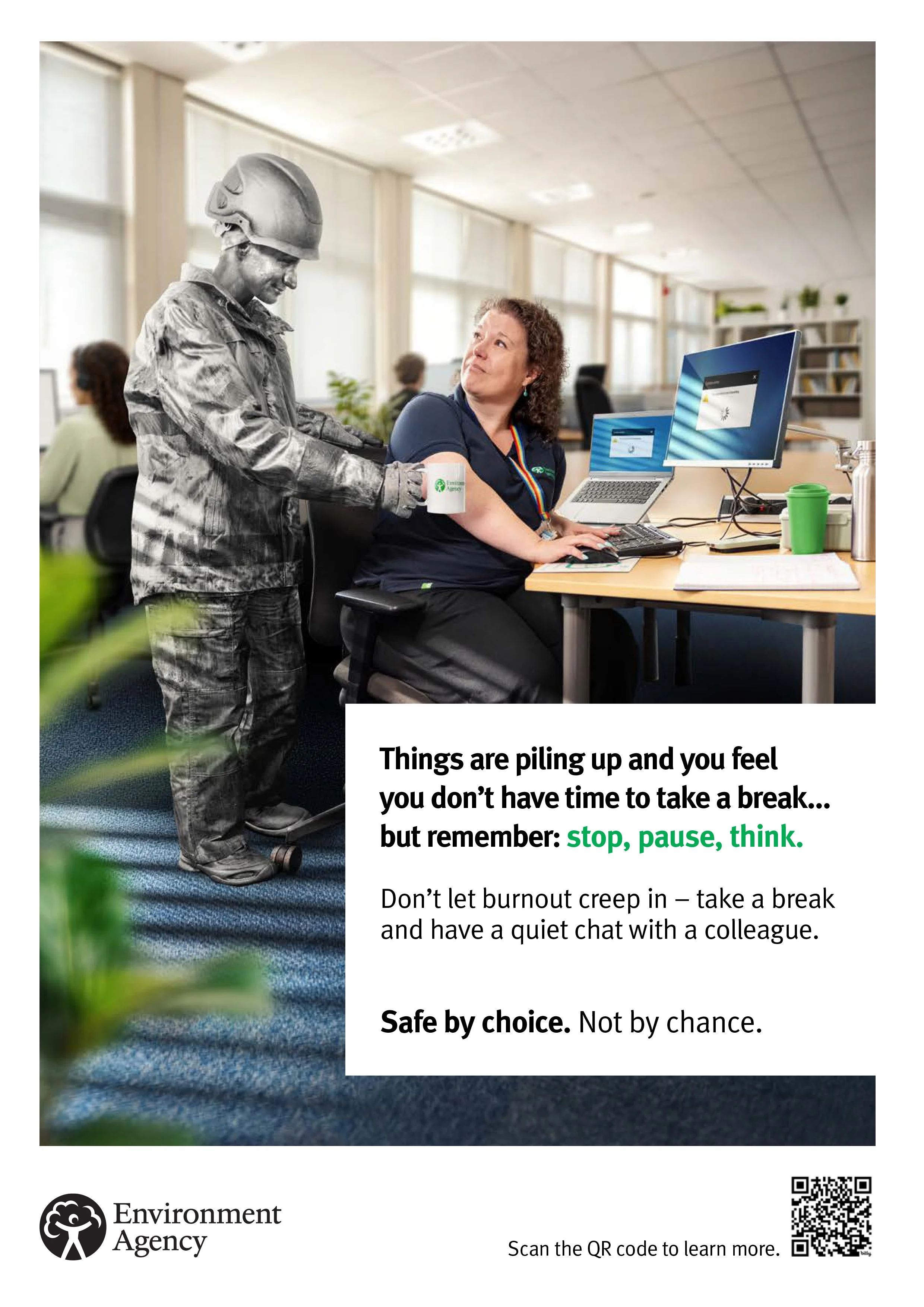
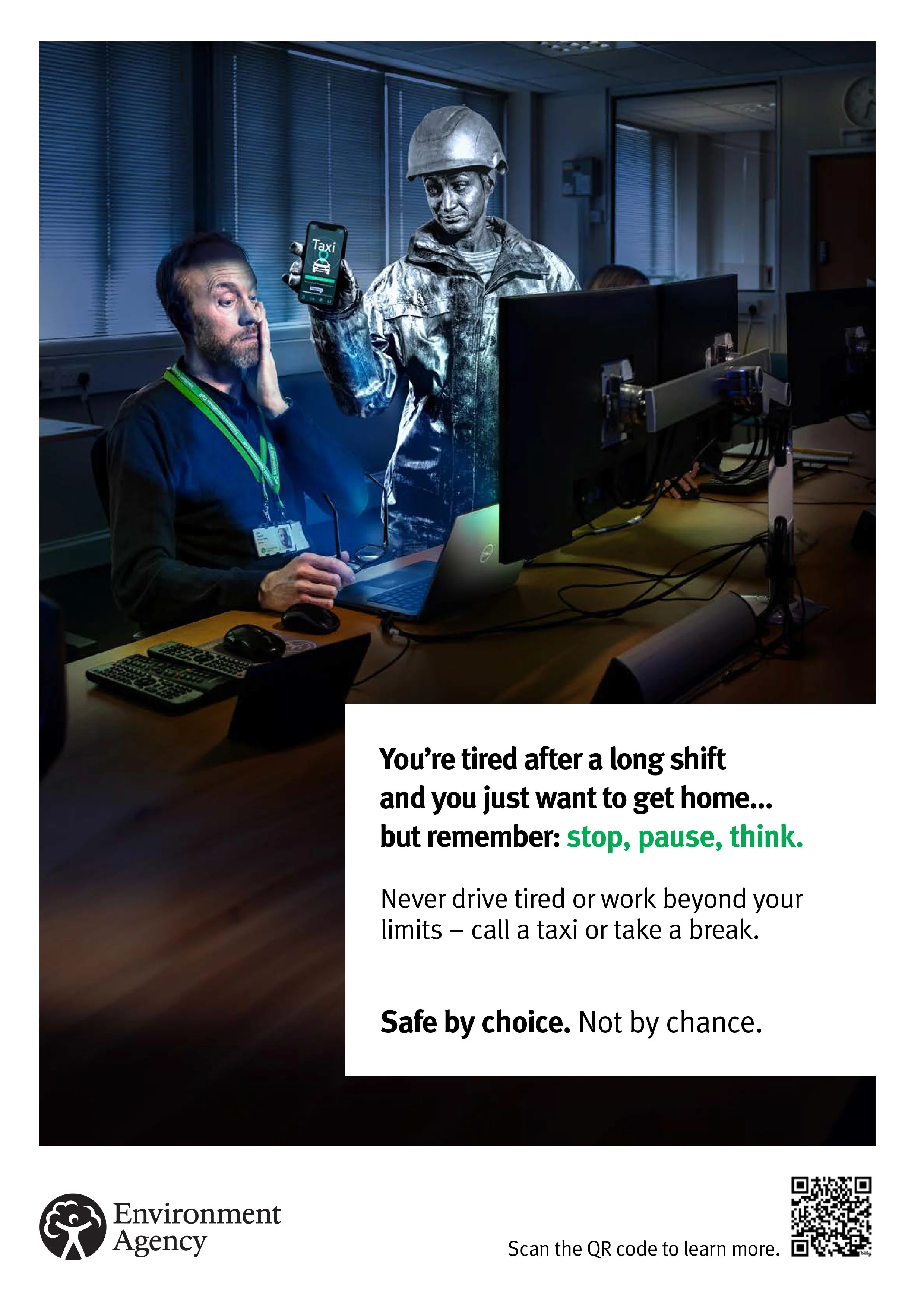
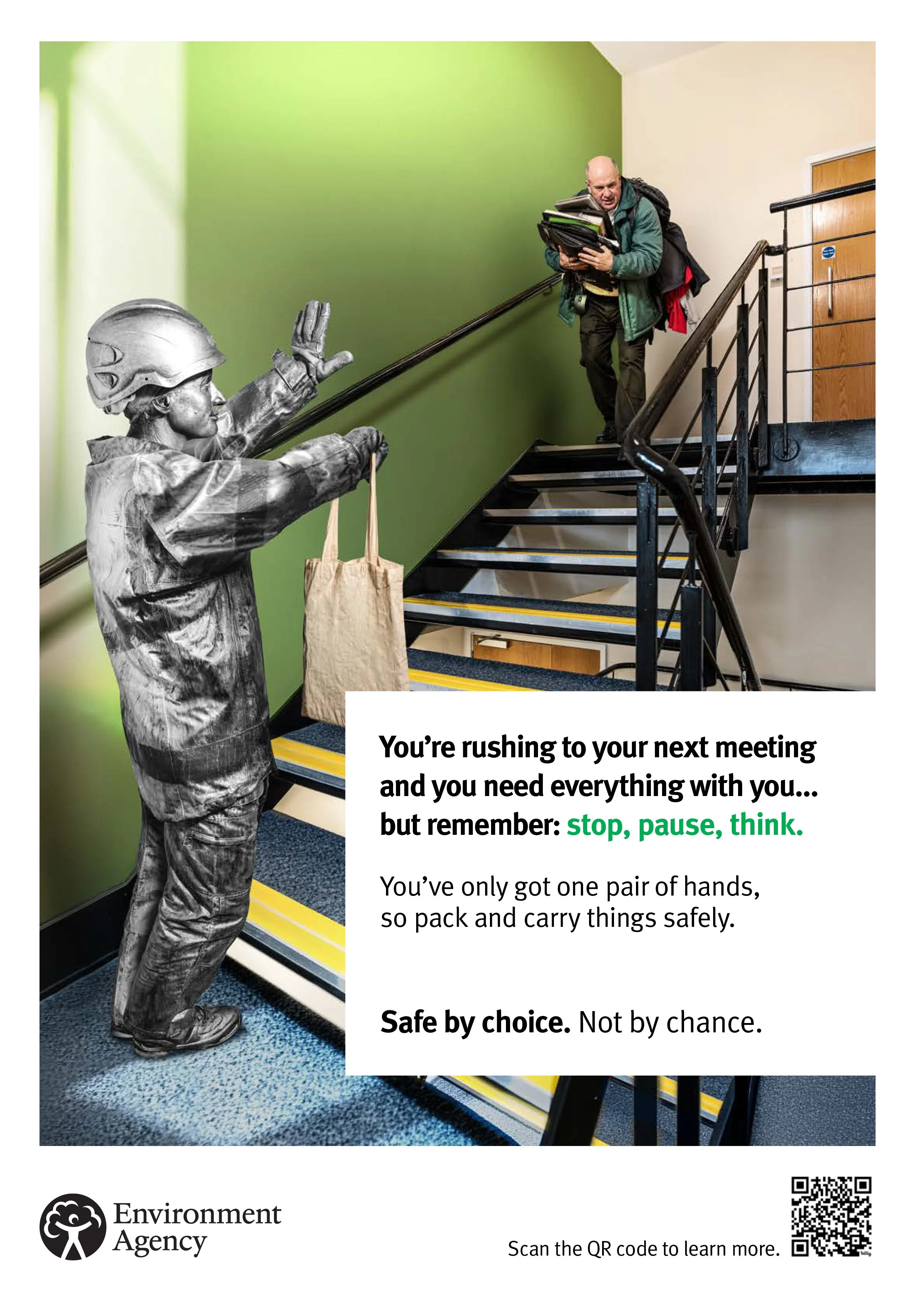
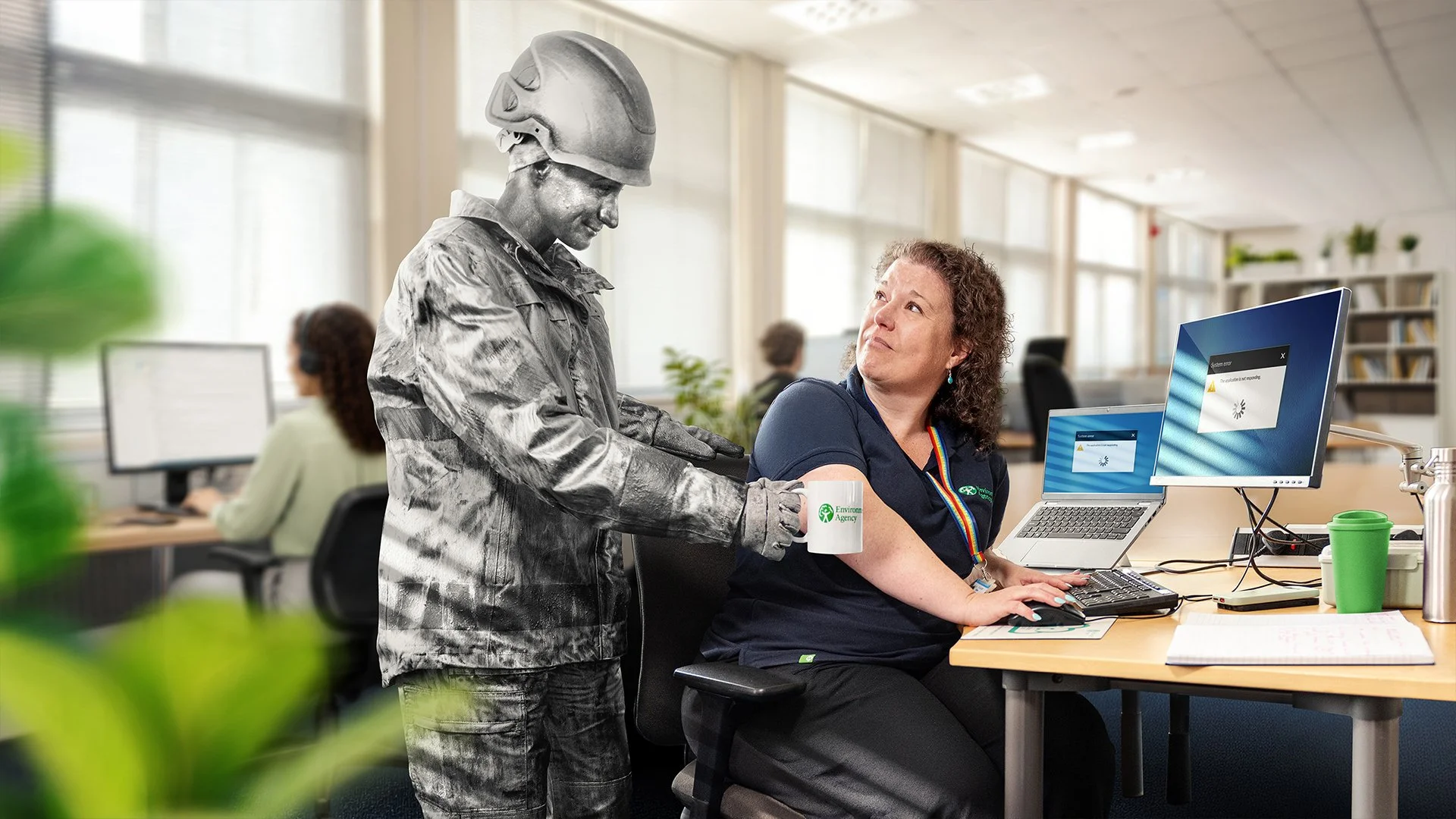
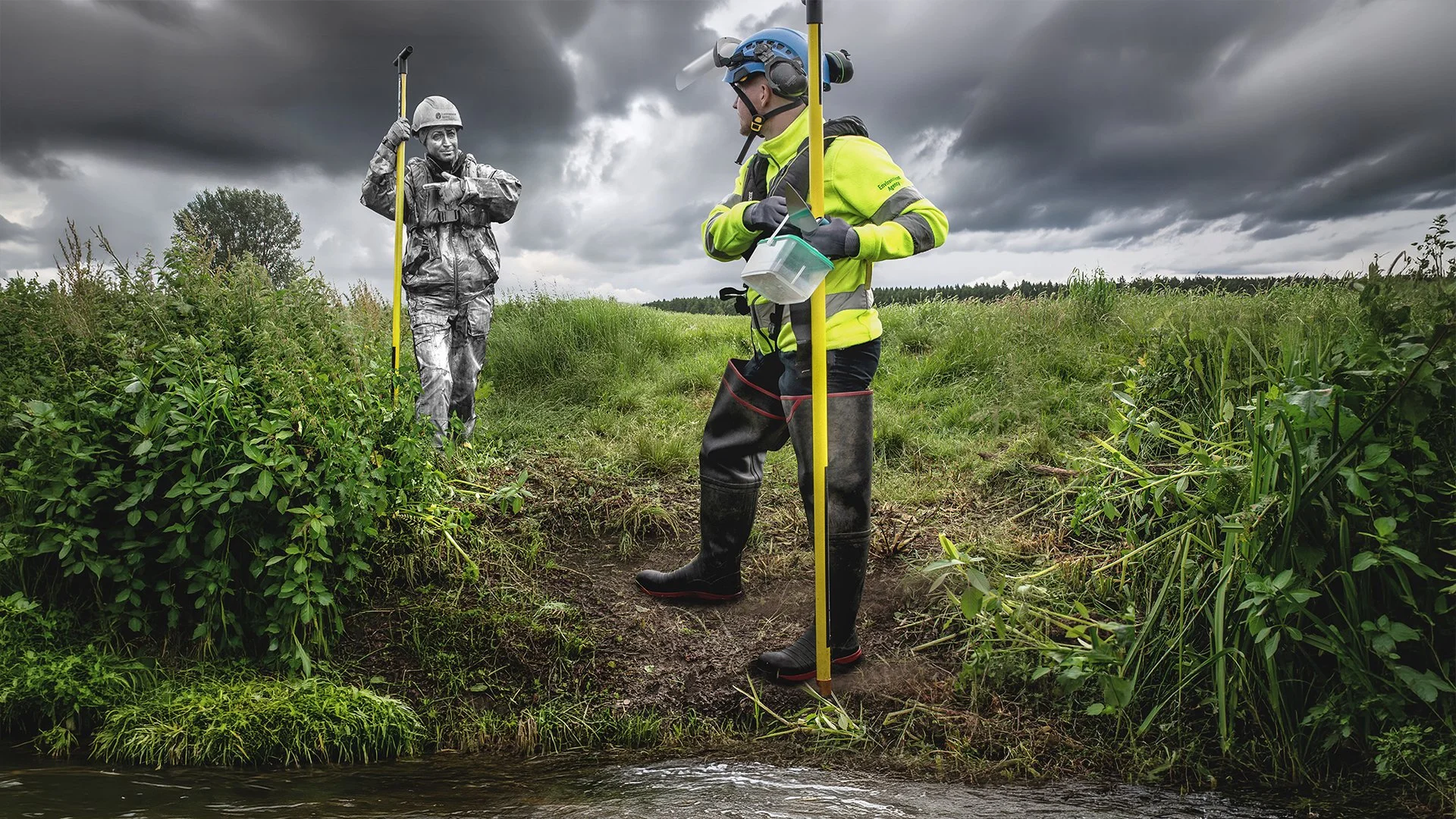
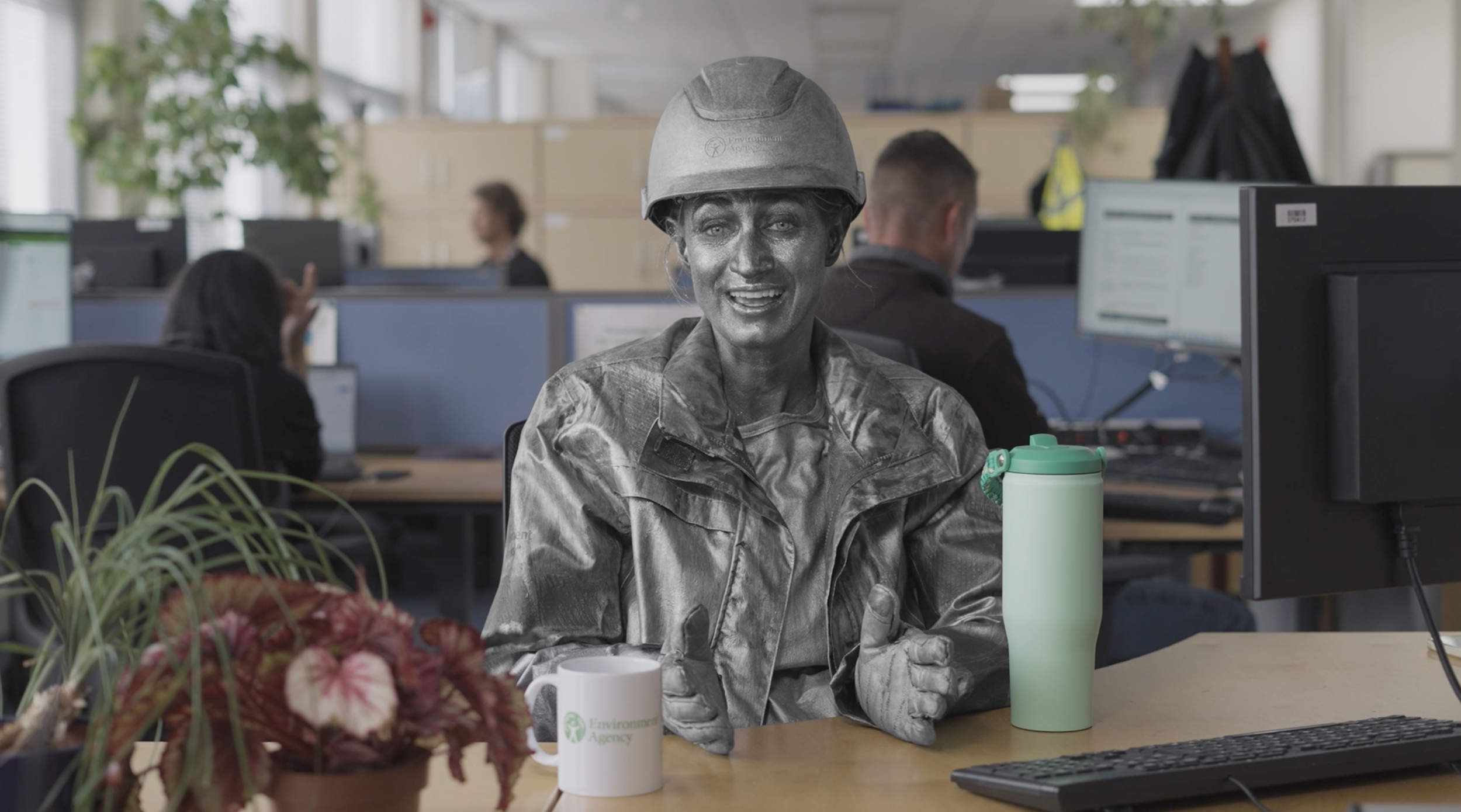
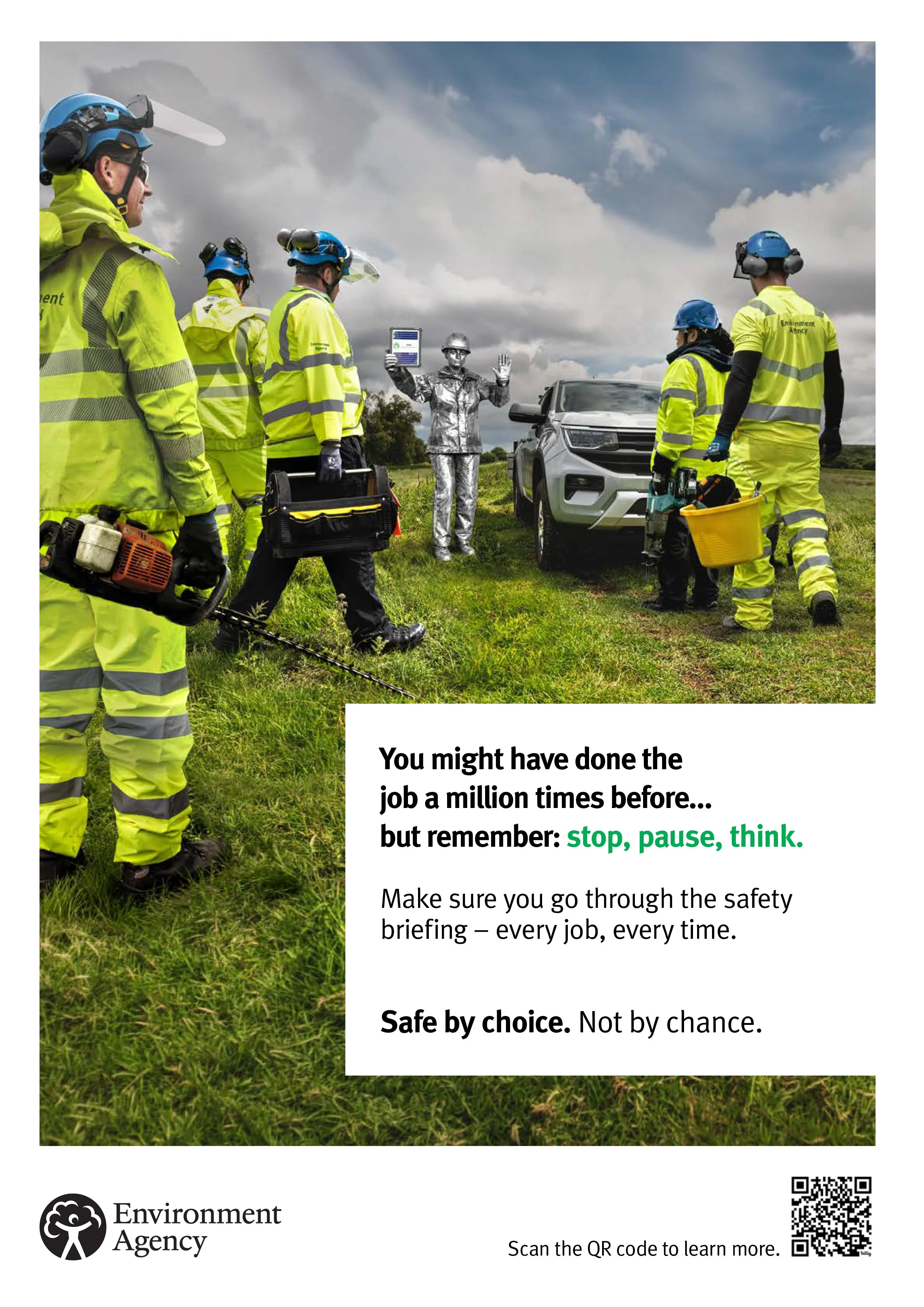
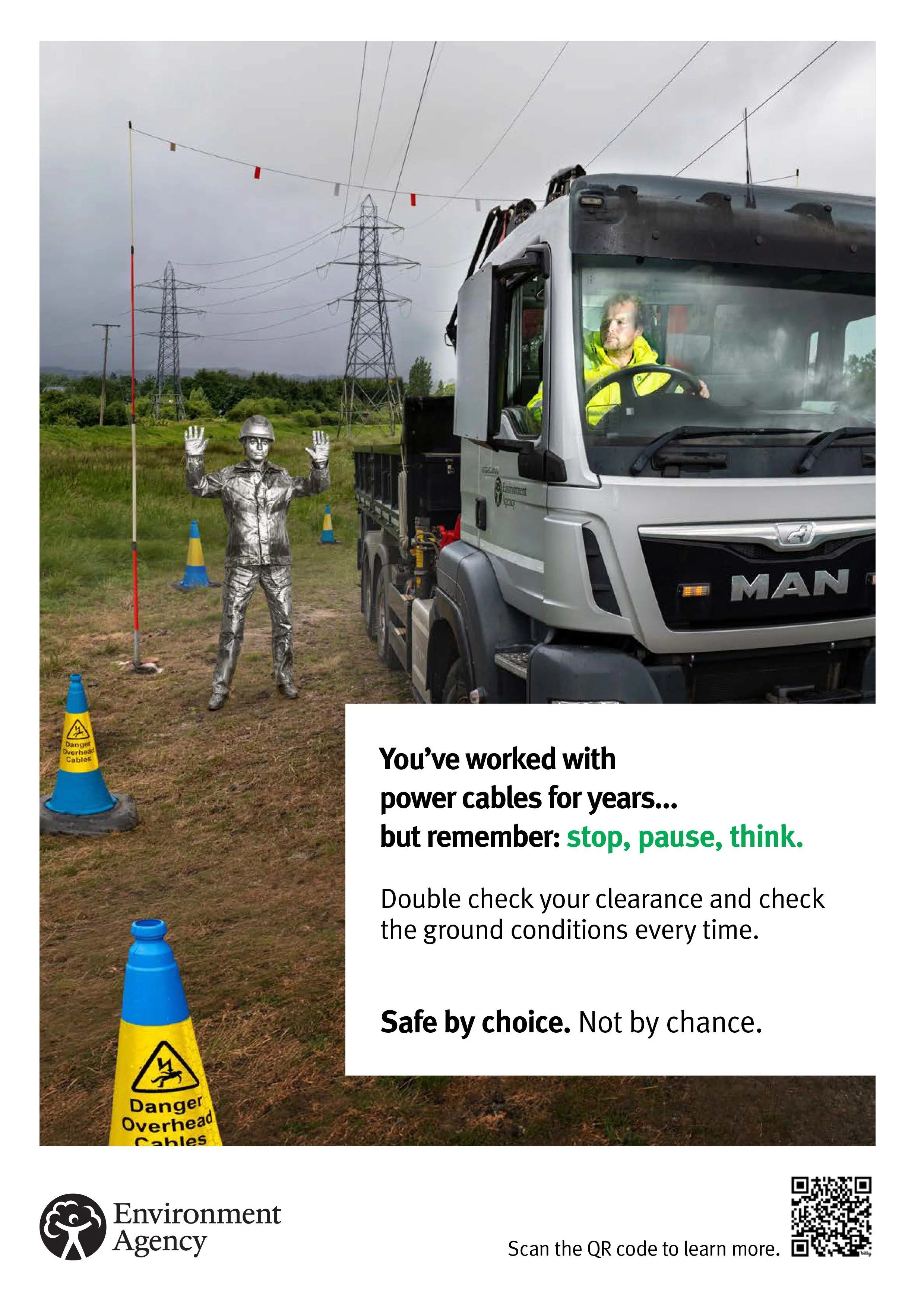
Introducing Grace Stillman, our living statue – living statues being famed for their ability to freeze at will… In full silver PPE and matching skin, she appears alongside her colleagues in familiar office and field-based scenarios. No explanations – she’s simply part of the team. Until, at the first sign of risk, she freezes and reminds everyone around her to stop, pause and think before carrying on.
The creative is intentionally unexpected and thought-provoking. Grace makes people look twice, ask questions and talk about the issues – which is exactly what a message about stopping and thinking needs to do. In a wider sense, the campaign is aligned to the new Agency narrative which encourages colleagues to think independently, embracing challenges and different ways of working.
Bringing our statue to life
Grace became the hero of the first phase of the campaign.
We created two films. One focused on risks in the field. The other looked at everyday office risks. The films showed three common risk scenarios and featured real colleagues making the choice to ‘Stop. Pause. Think.’ at critical moments.
We also shot campaign photography covering six different scenarios. This gave the Environment Agency a bank of striking and consistent images to use across the organisation.
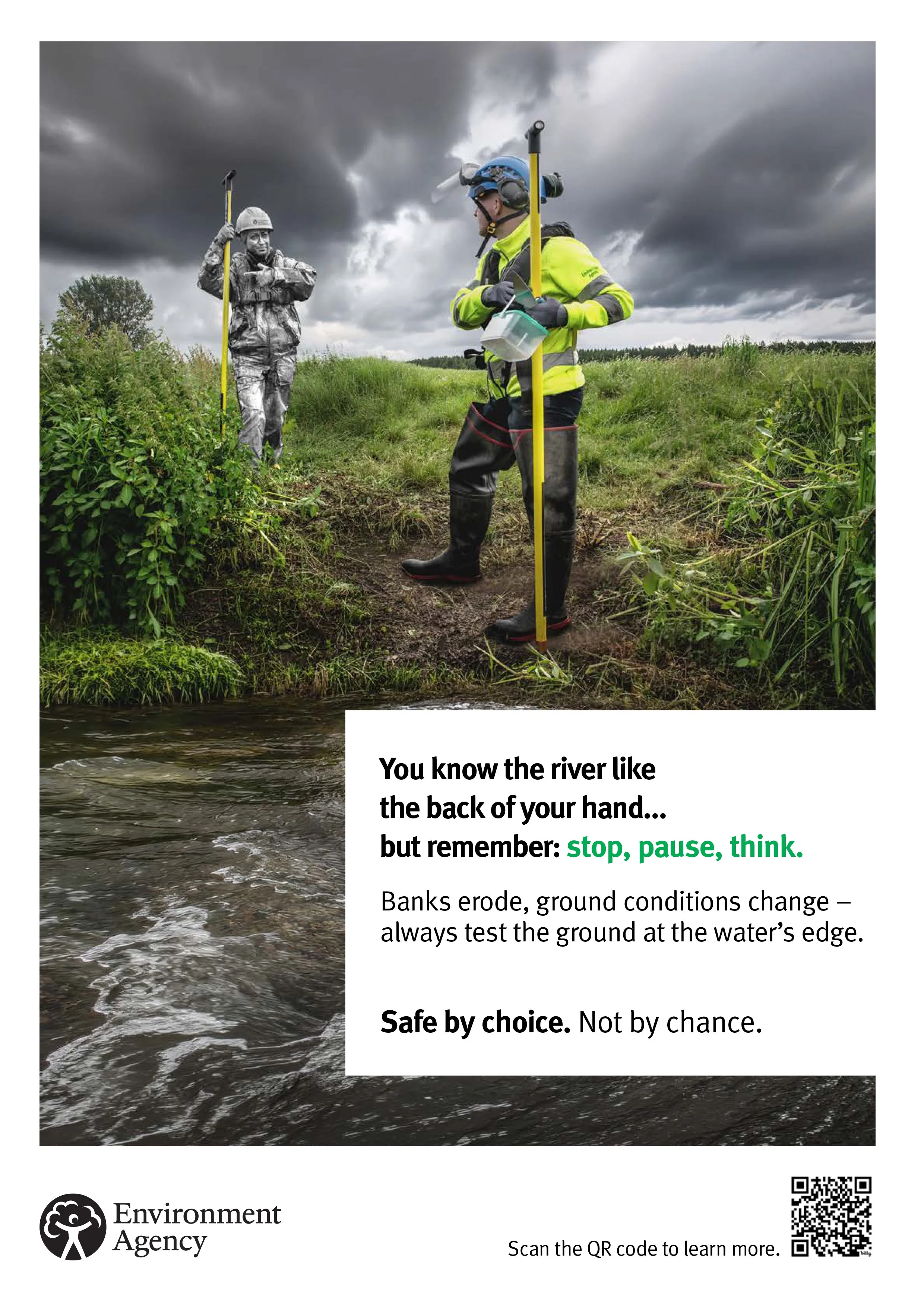
The idea was then extended through posters, postcards, stickers, coasters and SharePoint content, and pulled through into three briefing packs, which gave leaders and teams simple prompts to help them talk about safety and apply the message to their own work.
Before launch, we worked with senior leaders and health, safety and wellbeing business partners, giving them the tools they needed to introduce the campaign and build support for it.
Crucially, the stories gave mental health equal weight. ‘Stop. Pause. Think.’ applies just as much to recognising the signs of stress, fatigue and burnout as it does to physical hazards – whether that means calling time after a run of long days or on-call shifts, stepping in when a colleague is running on empty, or simply asking for support. That made the campaign truly rounded, speaking to the whole person rather than just the risks of the job.
The result was a flexible campaign platform that could work across different roles, locations and working environments.
The campaign has made a real impact:
12,000+ SharePoint page visits
Nearly 5x campaign target
Teams have recorded 2,353 safety briefings and conversations (a 90% completion rate) and report an immediate change in behaviour.
Those conversations are also richer and more honest about risk, with colleagues sharing examples of times they paused, challenged or stopped work. Colleagues have particularly welcomed the emphasis on wellbeing, as something equally deserving of attention.
The campaign is still live, so the longer-term results are yet to come. But after this early success, the Environment Agency has planned another phase of activity featuring Grace. This will explore additional risks and give colleagues more reasons to stop, pause and think.
This project shows how we invest the time to understand your organisation – talking to your teams, digging into your data and real behaviours, and going into your workplaces whatever the time or conditions. That’s how we create safety campaigns that feel authentic to your people and deliver measurable results that justify your investment.